Teenagers Can’t Vote, But that Shouldn’t Stop them From Being Politically Engaged
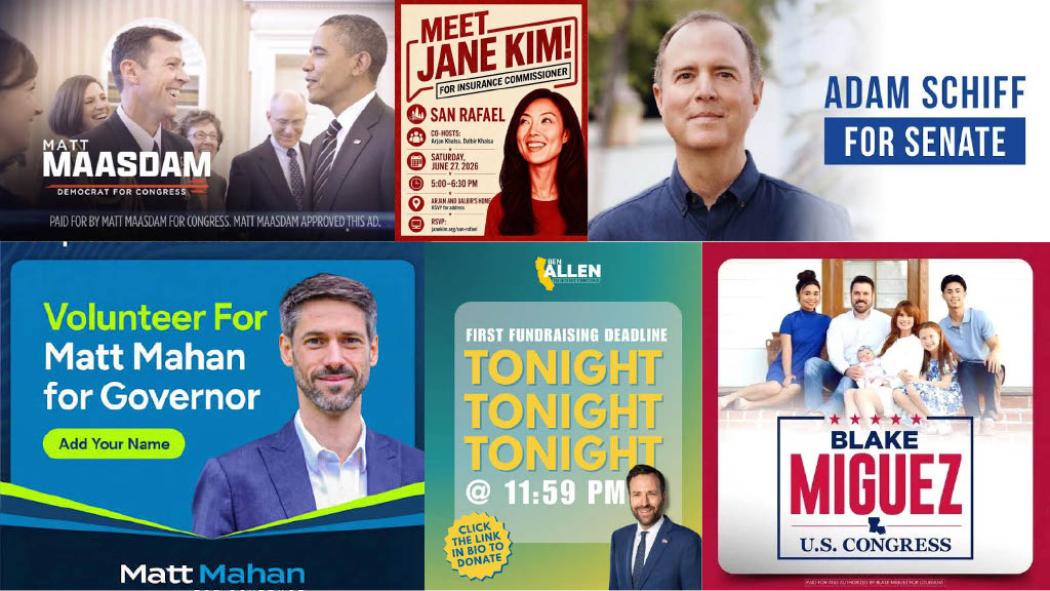
With primary elections underway for state level positions, campaign promotional media has flooded my social media timelines. From ads on Youtube, posts on Instagram, and political videos on Tiktok, I watch as each candidate passionately speaks into the camera, advocating for the improvements they plan to implement if elected. Like many other teenagers, I typically scroll past campaign videos, but I've started to wonder: what is the purpose of watching campaign media if I am not even eligible to vote?
When it comes to politics, an overwhelming majority of teenagers consume political information through social media. According to the Washington Post, around 57% of teenagers learn about current events through social media, as compared to the 30% who actively keep up with political issues through reputable news sources. Social media has become a powerful tool for politicians to connect with teenagers and encourage registered voters to turn out to the polls or volunteer for a campaign.
However, campaign media is not the only way teenagers experience political content. Peer political expression—communication among equals such as friends or classmates—has become an increasingly popular way to discuss political beliefs. A study conducted by Tufts' Center for Information and Research on Civic Learning and Engagement (CIRCLE) reveals the increasing popularity of peer political expression: 45% of teens engaged in the creation of media, 29% created their own political content after seeing relevant posts, and 20% participated in online debates.
When Facebook and Twitter first emerged, politics and social media were much less interconnected than they are today. However, when debates over LGBTQ+ and reproductive rights, mental health, and education policy continue to gain traction on social media, young people like myself are inspired to get involved in politics, as these issues directly impact our lives. While many of us may not be able to vote, we still play a meaningful role in the political community through campaigning, political demonstrations, and youth councils.
In campaigns, many politicians also champion causes we, as teenagers, typically care about. Issues surrounding environmental justice, social inequality, and gun violence prevention resonate deeply with youth: there are nearly 300 youth-led environmental coalitions worldwide according to online databases. Although we may not be directly responsible for carbon emissions and air pollution, we understand the serious consequences of climate change. With temperatures rising three times faster since 1982, global warming will persist and we will be the generation that ultimately experiences its aftermath.
Another movement younger generations are passionate about is social inequality, which encompasses wealth, healthcare, educational, and gender disparities. We relate to each category for unique reasons, but the most common factor is our own experiences. Unlike environmental justice, whose effects may be less immediate, social inequality and policy can be seen in every part of our life. When someone in our lives comes from an immigrant background, is a part of the LGBTQ+ community, and experiences poverty, our natural reaction is empathy or even anger to reform the system. A policy that leaves marginalized communities unprotected is a policy that personally affects us, inspiring us to join or lead movements pushing for reform.
Lastly, with 44,000 gun violence deaths in the United States in 2024 and 223 school shootings in the United States in 2025, gun violence is a grave issue that directly affects us. In school, we often practice active-shooter drills in the case of an emergency. The fear that this threat could one day become a reality, is what scares us most, making gun prevention measures an issue we deeply resonate with. So, to answer my initial question: what is the purpose of watching campaign media if I am not even eligible to vote?
The answer is obvious: policy affects every part of our life. We watch campaign media because these politicians, if elected, are in charge of policies directly impacting our education and daily family life.
The truth is, teenagers can influence major policymaking decisions and gain political influence. So if you are a teen and find yourself pondering if you have the ability to influence politics, you must understand that you certainly do. Start by volunteering on a campaign for a politician you support, joining local protests, or spearheading registration drives. And even if these opportunities are not available, surrounding yourself with politics and learning more about candidates and current events is undeniably our responsibility as citizens. As upcoming voters, skilled social media users, and the future generation of politics, we have the power to influence policies and it is time for us to use it.